

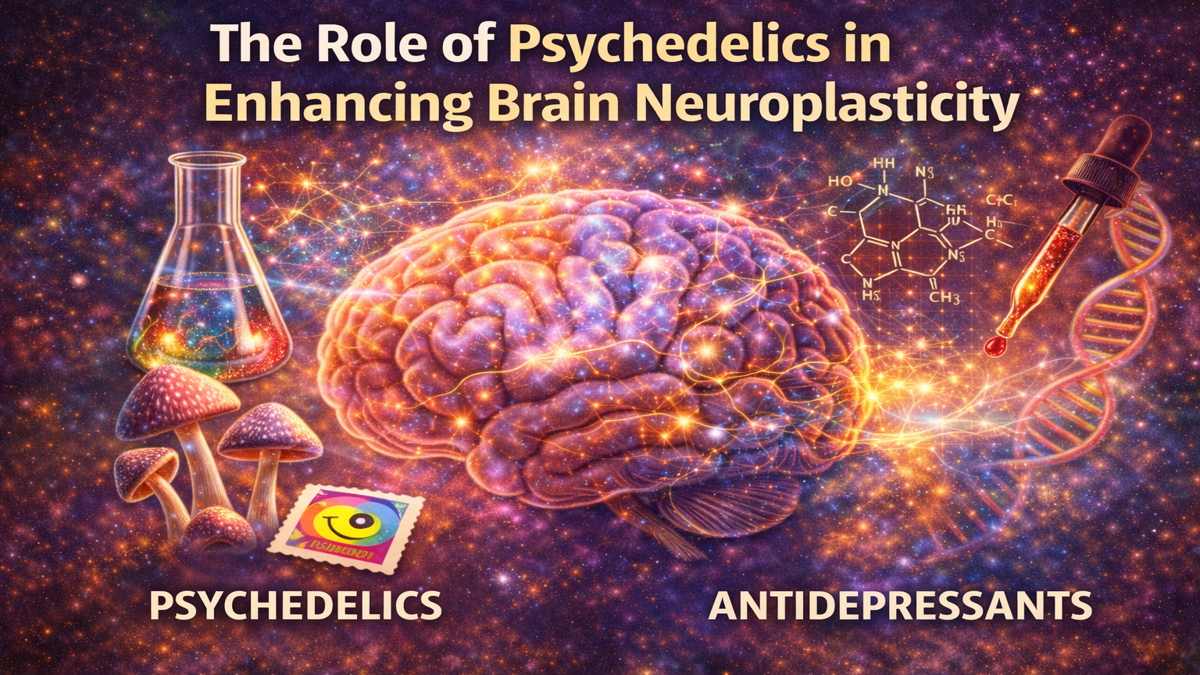
The Role of Psychedelics in Enhancing Brain Neuroplasticity
How LSD, Psilocybin, and Other Psychedelics May Rewire the Brain
In the past decade, psychedelic substances such as LSD, psilocybin, and DMT have moved from the fringes of culture into the center of scientific research. Leading universities and neuroscience labs are now investigating how these compounds influence brain function, mental health, and cognitive flexibility.
One of the most exciting discoveries emerging from this research is the connection between psychedelics and neuroplasticity—the brain’s ability to reorganize itself by forming new neural connections. Scientists increasingly believe that this plasticity may explain why psychedelic-assisted therapy can produce rapid and long-lasting improvements in depression, anxiety, and trauma.
This article explores the science behind psychedelic-induced neuroplasticity, the biological mechanisms involved, and what these discoveries could mean for the future of mental health treatment.
Understanding Neuroplasticity
Neuroplasticity refers to the brain’s ability to adapt, change, and reorganize its neural circuits throughout life. This capacity allows the brain to:
-
Learn new skills
-
Recover from injury
-
Adapt to new experiences
-
Change behavioral patterns
At the cellular level, neuroplasticity involves processes such as:
-
Synaptogenesis – the formation of new synapses between neurons
-
Dendritic growth – expansion of neural branches that transmit signals
-
Strengthening or weakening of neural pathways
In mental health, neuroplasticity is especially important because many disorders—such as depression and anxiety—are associated with reduced neural flexibility and rigid patterns of brain activity.
Psychedelics and the Brain: A New Neuroscience Frontier
Classic psychedelics like LSD and psilocybin primarily act on the brain’s serotonin system, particularly the 5-HT2A receptor, which regulates mood, perception, and cognition.
When these receptors are activated, they can trigger widespread changes in brain connectivity and neuronal signaling. Modern research suggests that psychedelics may induce a temporary state of heightened neural plasticity, allowing the brain to form new connections more easily.
In other words, psychedelics may create a biological window during which the brain becomes more flexible, adaptive, and capable of change.
Evidence That Psychedelics Promote Neuroplasticity
Multiple studies have demonstrated that psychedelic compounds can directly stimulate structural changes in neurons.
Laboratory research has shown that substances such as LSD and DMT can:
-
Increase dendritic branching
-
Promote growth of dendritic spines
-
Stimulate new synapse formation
These structural changes indicate enhanced neural connectivity and improved communication between brain cells.
Other studies have found that psychedelics can produce rapid and persistent antidepressant effects, likely linked to their ability to stimulate neural plasticity pathways.
The Role of the 5-HT2A Receptor
A major mechanism behind psychedelic-induced neuroplasticity involves activation of the 5-HT2A serotonin receptor.
Research suggests that psychedelics activate these receptors inside neurons, triggering molecular pathways that promote neuronal growth and connectivity.
Activation of these pathways can lead to:
-
Increased synaptic signaling
-
Enhanced learning and memory processes
-
Greater cognitive flexibility
Some studies also indicate that psychedelics may influence BDNF (brain-derived neurotrophic factor)—a protein critical for neuron survival and growth. Increased BDNF signaling is strongly associated with antidepressant effects and improved brain plasticity.
Psychedelics and Brain Network Reorganization
Beyond cellular changes, psychedelics also influence how large-scale brain networks communicate.
Brain-imaging research shows that psychedelic substances can temporarily disrupt rigid patterns of connectivity and increase communication between regions that normally operate separately.
For example, a study using brain scans found that psilocybin produced dramatic changes in functional connectivity across multiple brain regions, far greater than those produced by certain stimulant drugs.
This increased connectivity may allow the brain to explore new patterns of thought, perception, and emotional processing.
Why Neuroplasticity Matters for Mental Health
Many psychiatric disorders involve rigid patterns of thinking and emotional processing.
Examples include:
-
Repetitive negative thinking in depression
-
Persistent fear responses in anxiety
-
Trauma-related patterns in PTSD
By enhancing neuroplasticity, psychedelics may allow the brain to break out of these rigid patterns and establish healthier neural pathways.
Researchers believe this may explain why psychedelic therapy often produces rapid psychological breakthroughs and long-lasting emotional changes.
Some scientists describe this phenomenon as a “reset” of brain networks, enabling individuals to adopt new perspectives and behaviors.
Psychedelics and “Critical Periods” of Learning
Another fascinating discovery is that psychedelics may reopen critical periods of brain plasticity—windows during development when the brain is particularly sensitive to learning and environmental influence.
Recent neuroscience research suggests that psychedelics can temporarily restore these states, making the brain more receptive to therapeutic interventions, learning, and behavioral change.
This may explain why psychedelic-assisted therapy often combines drug sessions with psychological counseling and integration therapy.
Potential Applications in Mental Health Treatment
The neuroplastic effects of psychedelics have led researchers to explore their use in treating several psychiatric conditions, including:
-
Major depressive disorder
-
Treatment-resistant depression
-
Post-traumatic stress disorder (PTSD)
-
Anxiety disorders
-
Substance use disorders
Unlike conventional medications that must be taken daily, psychedelic therapies may produce lasting benefits after only one or a few sessions, potentially reducing long-term medication dependence.
Challenges and Open Questions
Despite growing enthusiasm, psychedelic neuroscience still faces important challenges.
Researchers continue to investigate:
-
Long-term safety of psychedelic treatments
-
Optimal therapeutic protocols
-
Differences between psychedelic compounds
-
The role of therapy during psychedelic experiences
While early findings are promising, scientists emphasize that more large-scale clinical trials are needed before psychedelic therapies become mainstream medical treatments.


